

Colourful bathroom: wallpaper ideas to set the mood
Getting wet is no problem: Did you know that wallpaper is over 2,000 years old? Once paper was invented in China, it wasn’t long before people began decorating their walls with painted lengths of paper. The idea reached Europe in the 15th century. At first, of course, it was a luxury reserved for the rich and powerful across our continent, until an ingenious mind in France built a machine that, around 1800, turned wallpaper into an affordable home accessory. Today, wallpaper is likely found in every room of your home, or at least in almost every one, as wallpaper in the bathroom is still among the more unusual design ideas. Plaster and, above all, tiles still dominate there; even the invention of water-resistant wallpaper has done little to change that.
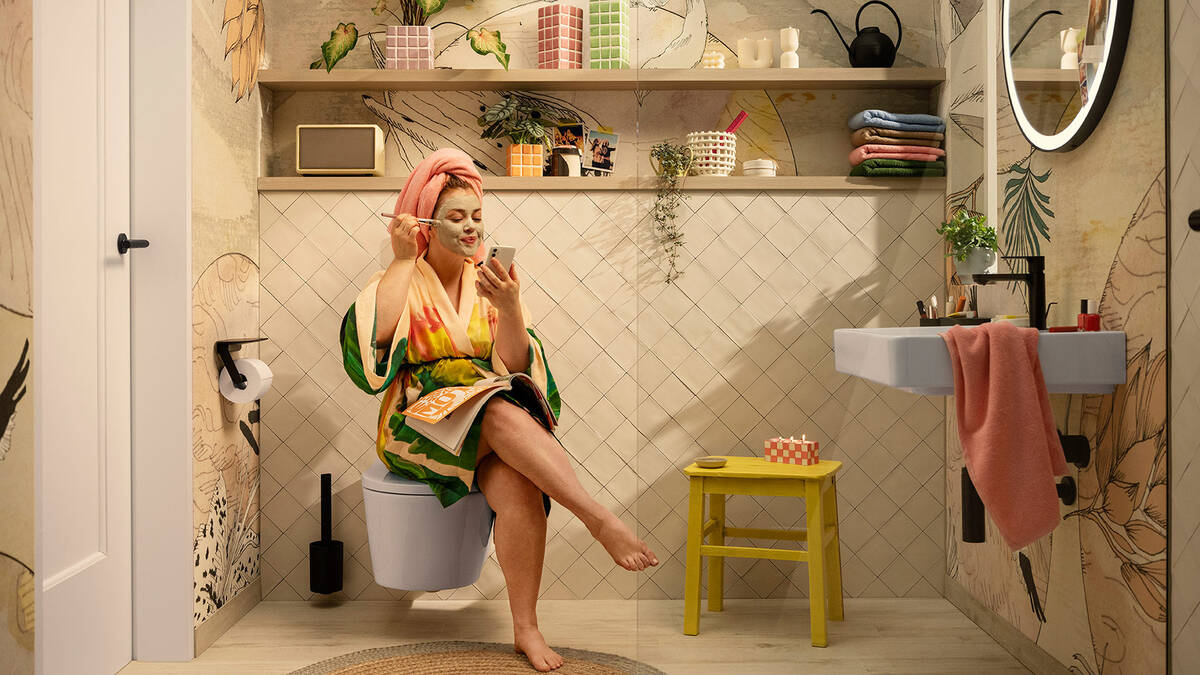
In this article, we’re putting an end to the swimming pool look. Together with our bathroom expert, Natascha Beha, we take you on a journey: we show you which types of wallpaper are genuinely suitable for damp rooms and explain, step by step, the key rules for wallpapering in the bathroom. We also take a close look at your design options and don’t shy away from the question of costs.
Here’s a quick overview of what to expect in this article:
- Wallpaper in the bathroom: Why bother?
- On DIN standards, moisture zones and types of wallpaper
- How to wallpaper your bathroom correctly
- Mistakes to avoid at all costs
- How much does wallpaper in the bathroom cost and how long does it last?
- Wallpaper as a design feature
- The most important questions and our answers at a glance
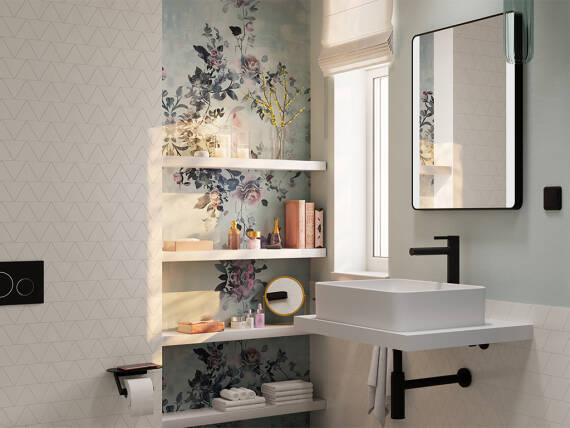
Design without limits: Wallpaper unlocks patterns, textures, colours and motifs that tiles can hardly achieve – from a minimalist look to a wall as a work of art. It’s easier to replace than other wall treatments, so many people go for bold colours, large-scale patterns or artistic motifs and discover design options they would never have tried with tiles or wall paint.
Seamless look: Unlike tiles, wallpaper creates no grout lines. This not only looks calmer and more modern, but also minimises precisely those areas in the bathroom that are hard to clean and where mould often forms.
Effortless to combine: Wallpaper is particularly well suited to half-tiled bathrooms and combines beautifully. After all, it’s the combination of different materials that makes a room feel more homely.
On-trend alternative: Using wallpaper puts you right on trend: the seamless look, a wellness atmosphere, warm materials and individualised spaces.
Easy to replace: Wallpaper is relatively easy to renew or replace when you’re tired of it and want a new style.
Design freedom in rented homes: You’re renting and want to spruce up your bathroom? Then go for wallpaper, as it can be removed without any permanent alterations to the building fabric.
Quicker and cleaner to hang: Hanging wallpaper is often less effort than tiling. During renovations, it also creates less mess and noise, and it usually takes less time.
Lower costs: Wallpaper can be significantly cheaper than high-quality tiles – both in terms of the material itself and the labour for the professionals who install it.

Wallpaper in the bathroom is a superb way to express your own style and shape the space to suit you perfectly.
Natascha Beha, hansgrohe Bathroom Expert
Bathrooms aren’t uniform; they’re divided into distinct zones. Around the bathroom sink, the rules differ entirely from those in the shower’s wet area. So not every moisture-resistant wallpaper suits every bathroom – a guest wc has completely different sealing requirements from a spa area with a floor-level bath. Let’s get an overview of the types of wallpaper available.
We work with manufacturers offering fully waterproof wallpaper. If you have any questions, we’re happy to help and can also put you in touch with a specialist company to hang the wallpaper safely.
Natascha Beha, hansgrohe Bathroom Expert
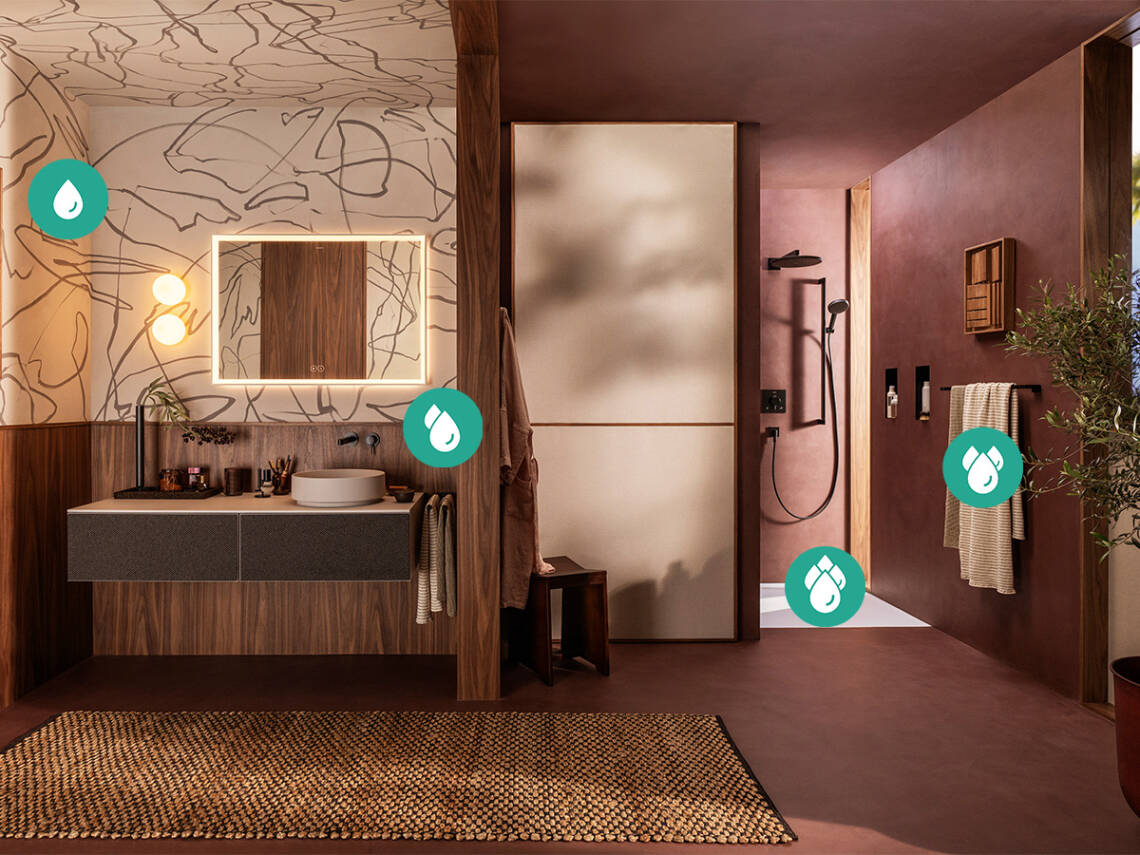
W0-I (low moisture): Walls far from the shower or bath, e.g. the wall above the wc or shelves.
W1-I (moderate moisture): Wall areas around the bathroom sink or bath, without constant contact with splashing water.
W2-I (high moisture): Direct shower areas, at floor level; brief water pooling possible.
W3-I (very high moisture): Spa areas, hotel showers.
Don’t overlook wash and scrub resistance, moisture resistance and dimensional stability. Wash and scrub resistance make caring for your wallpaper easier; moisture resistance and dimensional stability make it suitable for use in higher humidity classes.
3. Prepare the surface
A sound, clean surface is crucial for long-lasting wallpaper:
- Remove any old wallpaper residue, dust, grease and loose plaster.
- Check the surface is dry – especially important for renovations or after water damage.
- Fill and smooth any uneven areas, as wallpaper shows every bump.
- For new builds or renovations: Install waterproofing in all splash zones in accordance with DIN 18534!
4. Sealing/Impregnation
Only sealing makes your wallpaper suitable for use in wet areas:
- Non-woven, glass fibre or non-woven vinyl: Seal with latex paint or PU lacquer to increase resistance to abrasion and moisture. Clear lacquer is only suitable for W0-I/W1-I areas.
2K composite wallpapers: Often factory-sealed, directly suitable for splash zones.
Apply the coating evenly in 2–3 coats and allow each coat to dry completely.
Important: The seal protects the surface, but does not replace proper waterproofing in the shower or bath.
5. Installation
How to hang wallpaper properly:
- If necessary, cut the wallpaper lengths to size.
- Apply paste evenly. Note: With non-woven wallpaper, apply the paste to the wall, not the paper!
- Start in a straight corner or on a line marked with a spirit level.
- Hang the lengths with an overlap or edge to edge, and gently smooth out any air bubbles with a brush or wallpaper roller.
- Align edges and joins with particular care, and seal the joints if the wallpaper is to be water-resistant.
If you’ve done everything right, your wallpaper should hang securely, above all reliably protect your walls from water, and on top of that look really good. However, the more you try, the more you can get wrong. Hence:
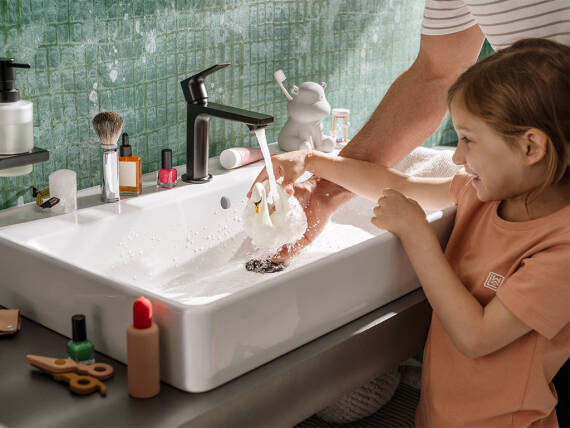
Mould is all too common in the bathroom. Over time, it can attack the building fabric and harm your health. Don’t let it take hold in your bathroom in the first place. In a wallpapered bathroom, the golden rule is this: check the wallpaper and its seal for damage immediately after installation, and regularly thereafter. Even a small crack or a buckled edge can be an entry point for mould – and once it’s behind the wallpaper, it’s hard to get rid of. Always repair any damage without delay.
Together, high humidity in the bathroom and a warm indoor climate create the ideal breeding ground for mould. That’s why proper ventilation is so important.
Natascha Beha, hansgrohe Bathroom Expert
Otherwise, two things help most against mould. First: A well-ventilated bathroom. Open doors and windows after showering and ensure a vigorous exchange of air. Second: A dry bathroom. Always give wet areas a quick wipe with a towel; that includes your moisture resistant wallpaper.
Improper sealing
Even robust wallpaper made from non-woven or fibreglass materials needs proper sealing when exposed to direct moisture. If you apply it unevenly, too thinly or on an unsuitable surface, you create areas where water can penetrate. These mistakes not only lead to the mould mentioned above; they also increase the risk of material damage and reduce the durability of your wallpaper. Proper sealing demands precision, especially in splash zones.
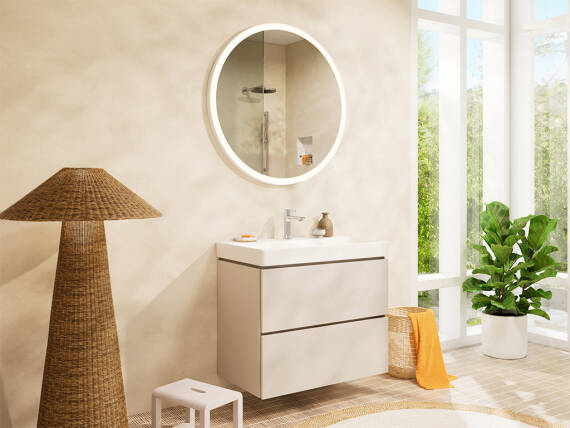
Using the wrong wallpaper
Just because a wallpaper says “moisture-resistant” doesn’t make it a universal choice for your bathroom. Thin non-woven or vinyl wallpapers can cope with a few splashes, but they’re not suitable for direct contact with water. Install such wallpaper in the shower or around the edges of the bath and it will soon swell, blister or start to peel. Always make sure the wallpaper you choose matches the moisture zone it’s intended for. If you’re unsure, opt for a higher-quality option rather than risk damage to your bathroom.
And please: never use normal paper wallpaper. Not even on walls that are far from any tap. During a hot shower or bath, humidity in your bathroom rises to tropical, greenhouse-like levels and the paper wallpaper will slide off the wall before you’ve even turned around. Even the best sealant won’t help.
Insisting on doing it yourself
Even wallpapering a normal room isn’t an easy task. In the bathroom, the difficulty rises sharply. If you’re unsure which type of wallpaper, sealing or waterproofing is needed for your bathroom, don’t hesitate to seek professional advice. Specialist companies accurately identify moisture zones, use the correct materials and implement the sealing prescribed by DIN 18534 with precision. If you’re not particularly handy, rely on professional support and save yourself time, money and a lot of hassle. Speaking of costs:
Costs per square metre for bathroom wallpaper
The price range for the different types of wallpaper varies by quality, print and manufacturer as follows:
- Non-woven wallpapers: around 5 to 20 euros per m²
- Vinyl wallpapers: around 10 to 30 euros per m²
- Glass fibre wallpapers: around 10 to 25 euros per m²
- Latex wallpapers: around 5 to 15 euros per m²
- 2K composite wallpapers: around 5 to 30 euros per m²; professional wet-area wallpapers can also cost up to 125 euros per m²
Please note: these are material costs only. The costs for sealing are not included. Expect prices to rise significantly for particularly elaborate wallpapers, such as photo wallpapers or fine art prints.
Depending on the type of wallpaper, the following lifespans apply:
- Non-woven wallpaper: around 5 to 10 years
- Vinyl wallpaper: around 10 to 15 years
- Fibreglass wallpaper: around 10 to 15 years
- Latex wallpaper: around 8 to 12 years
- 2K composite wallpaper: around 15 to 20 years
Bathroom wallpaper: costs and lifespan – the bottom line
Over the life of a home, bathroom wallpaper will need replacing several times. The costs, however, remain very manageable. The untiled wall area in an average bathroom is around 20 to 25 m². Even if you opt for an expensive wallpaper, the material costs come in well under 500 euros. And the occasional change of wallpaper needn’t be a downside; sooner or later we all tire of a room. After a few years, refreshing your bathroom is a chance to try something new, experiment with colour and adapt the space to your current preferences. All it takes is a little creativity and you’ll feel as if you’re on holiday in your new bathroom.
Which brings us to our final point.
Bathroom design concept: Wallpaper as design elements
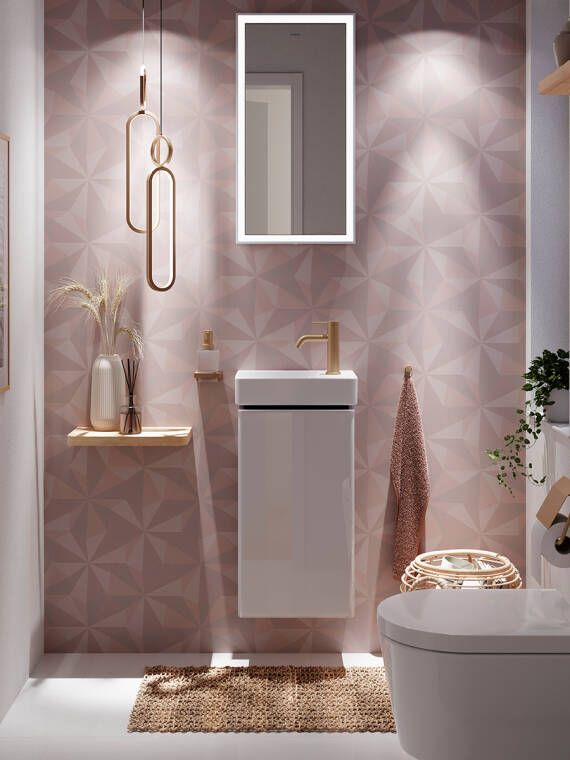
Colours and light, in concert with wallpaper
Wallpaper is particularly sensitive to light. Matt textures appear serene and premium under subdued lighting, while slightly reflective wallpaper can pick up and carry light from mirror lighting or LED strips.
Light wallpaper colours make the bathroom feel more spacious, cool tones emphasise cleanliness and clarity, while warm shades bring cosiness. To let every effect in your bathroom come into its own, we recommend a lighting plan that considers both direct lighting and indirect light sources.
Wallpaper between taps and ceramics
Taps in black, stainless steel or brass create a striking interplay with the wallpapered backdrop. A structured non-woven wallpaper can lend matt taps greater elegance, while a subtle surface accentuates glossy elements like the basin or shower mixer. And ceramics also play a role. On clean white surfaces, harmonious, understated patterns or natural tones work particularly well. By contrast, coloured basins welcome expressive designs. Your wallpaper is the unifying element that visually ties your bathroom together while clearly setting its individual zones apart.
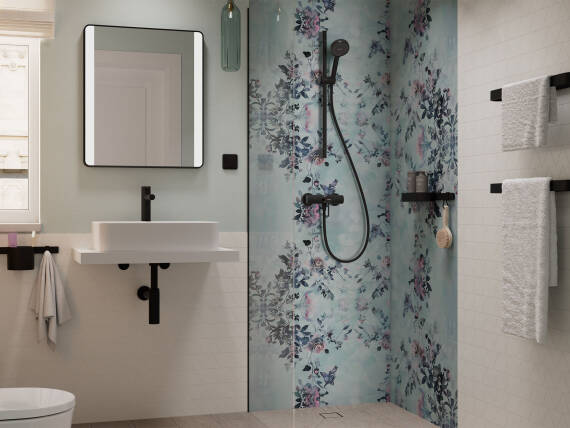
Wallpaper behind the glass partition
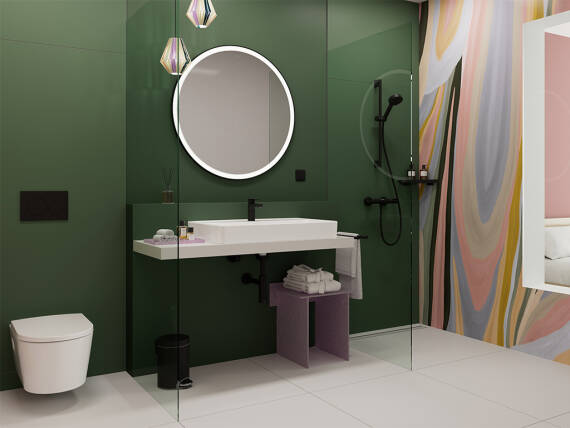
With its uniform surface, wallpaper looks particularly premium behind glass: no grout lines draw the eye, no right-angled lines disrupt the overall look. Everything remains clear and harmonious. Like a picture frame, a glass partition can even enhance the wallpaper’s sense of depth, especially with photorealistic motifs. The simpler the glass, the more the wallpaper behind it stands out as a design element. An effect that traditional tiled shower areas can hardly achieve.
Wallpaper and spatial perception
Wallpaper changes a room’s proportions and how it is perceived. Horizontal lines elongate it; vertical patterns lend it elegance. Fine, gentle textures in particular create a feeling of calm and are ideal for smaller bathrooms. Large patterns, by contrast, need ample space to realise their full effect.
Only a mix of different materials makes a room truly cosy. No wonder natural stone slabs and large-format panels, combined with wallpaper, are firmly on trend right now.
Natascha Beha, hansgrohe Bathroom Expert
If you do have this generous space, it can deliver striking effects: a mix of wallpaper, tiles, plaster or wood creates lively contrasts and naturally zones the bathroom. Wallpaper can introduce warm expanses, while ceramics and mineral materials draw crisp lines. The result is a modern, welcoming atmosphere that plays deliberately with materials, rather than letting everything blur into a single look.
The psychology of colours and wallpaper in the bathroom
In your bathroom, colours behave quite differently from those in living spaces, because here they interact not only with reflections and light, but of course with the fascinating element of water. Without delving too far into the details – that’s a topic in its own right – the following holds for your bathroom:
- Blues and greens convey freshness and purity.
- Beige, sand and cream create warmth and calm.
- Anthracite or black read as modern, but only with good lighting.
- Soft pastels lend lightness and are particularly suitable for small bathrooms.
Every colour influences the mood instantly. A warm bathroom feels cosy and inviting, while a cooler bathroom appears restrained and clear. Wallpaper lets you shape the space deliberately without having to retile the entire room when you long for a new atmosphere.
Bathroom wallpaper: You decide what happens next
Alternatively, you can of course start designing your bathroom digitally – for example with our hansgrohe bathroom planner. While you can’t plan in wallpaper directly there, you can experiment with different colour and material schemes to get a feel for the atmosphere you want for your future bathroom. On request, we’ll gladly recommend the right specialist company for the later implementation – including professionals who can support you with selecting and hanging wallpaper.
And if, after a few months, you think: "Maybe my bathroom should have a completely new look“, that’s easily done. Wallpaper is much easier to replace than tiles – unlocking almost limitless design options.
Bathroom wallpaper is treated with a suitable clear varnish, sealing or protective system. The key points are:
Select the appropriate sealer for the type of wallpaper.
Apply several thin coats evenly.
Seal the edges with particular care.
Allow sufficient drying time between coats.
In wet zones, use only systems in accordance with the manufacturer’s instructions.
Incorrect sealing is one of the most common causes of damage.
Lifespan depends on the material and the level of moisture exposure:
Non-woven wallpaper: approx. 5–10 years
Vinyl and fibreglass wallpaper: approx. 10–15 years
Latex wallpaper: approx. 8–12 years
2K composite wallpaper: approx. 15–20 years
With good ventilation and proper sealing, the lifespan can exceed these ranges.
For typical damp rooms, high-quality non-woven or vinyl wallpaper is suitable, ideally washable, scrub-resistant or moisture-resistant, depending on the zone. In high-wear areas – such as around the bathroom sink or bath – fibreglass wallpaper or robust non-woven-vinyl combinations provide high stability. It is crucial that the wallpaper is dimensionally stable and does not warp when exposed to moisture. Always observe the different moisture zones in accordance with DIN 18534.